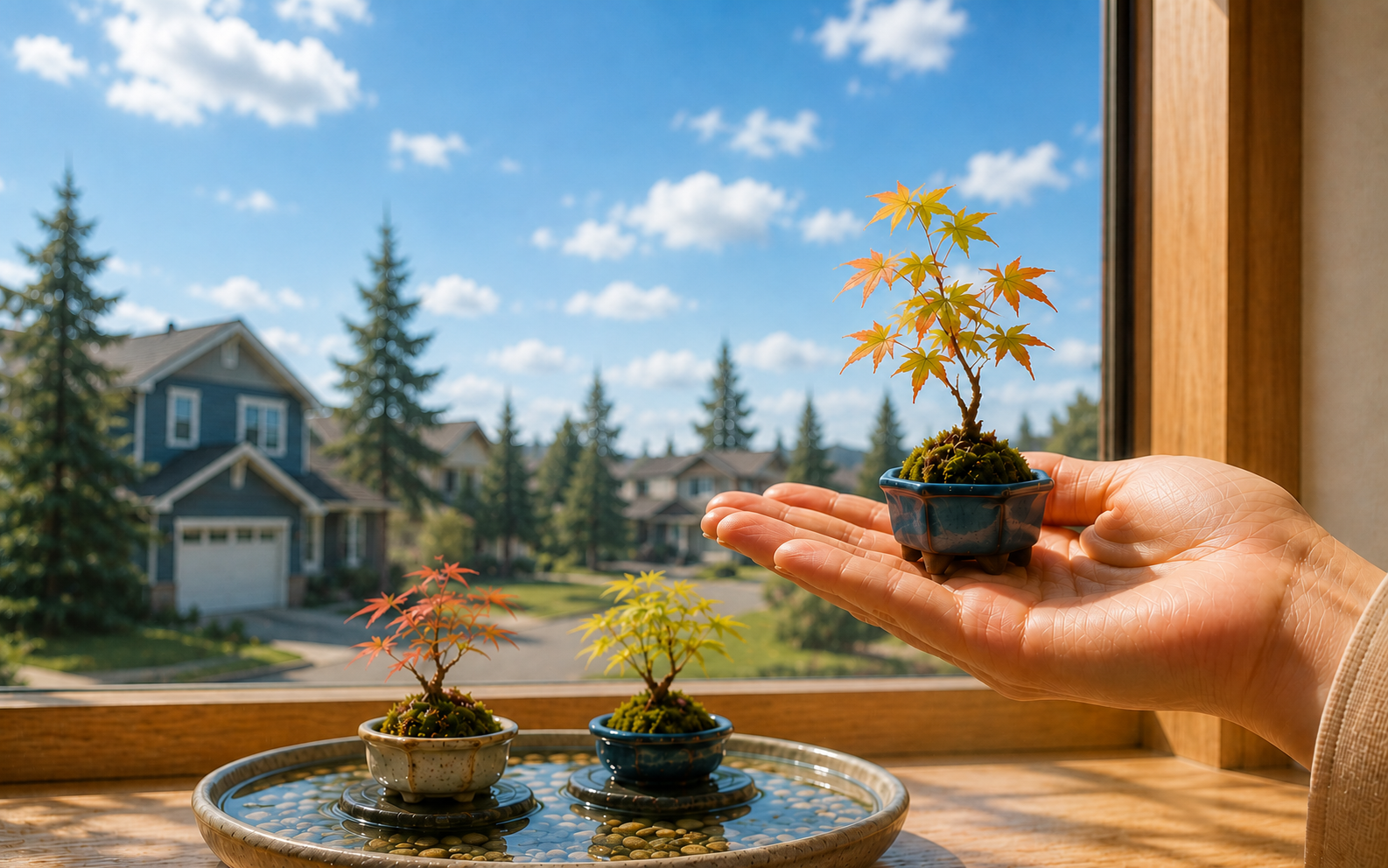
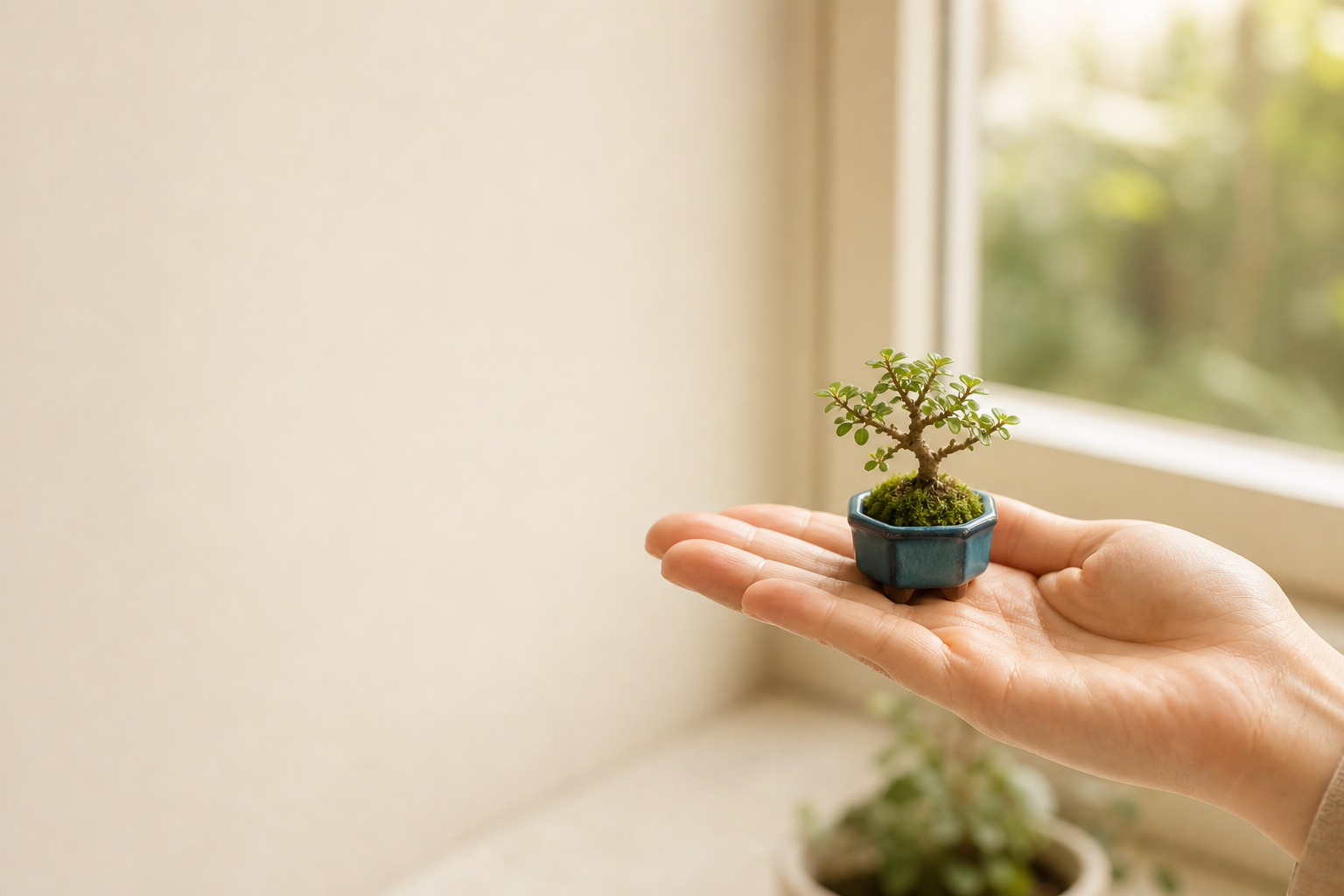
A palm-sized maple bonsai in a dark blue glazed pot, held in warm window light against a blue sky

A Beginner’s Guide to Mame Bonsai

Create Beauty in the Smallest Details

A tiny tree. A quiet moment. A world of calm.

A miniature living ritual for slow mornings, quiet shelves, and the small moments that make a home feel like your own.

Begin your quiet ritual

This page contains affiliate links. As an Amazon Associate I earn from qualifying purchases.

Tiny bonsai bring the beauty of traditional Japanese bonsai into even the smallest living spaces. With the right pot, soil, tools, and a little patience, beginners can create a miniature tree that feels both calming and personal.

This guide explains the basic steps and introduces a few beginner-friendly supplies available on Amazon US.

Mindful & Calming

A moment of peace in your busy day.

Small Space Friendly

Perfect for any shelf, desk, or windowsill.

Naturally Beautiful

Living art that brings nature closer.

Easy to Start

Small steps.
Big enjoyment.

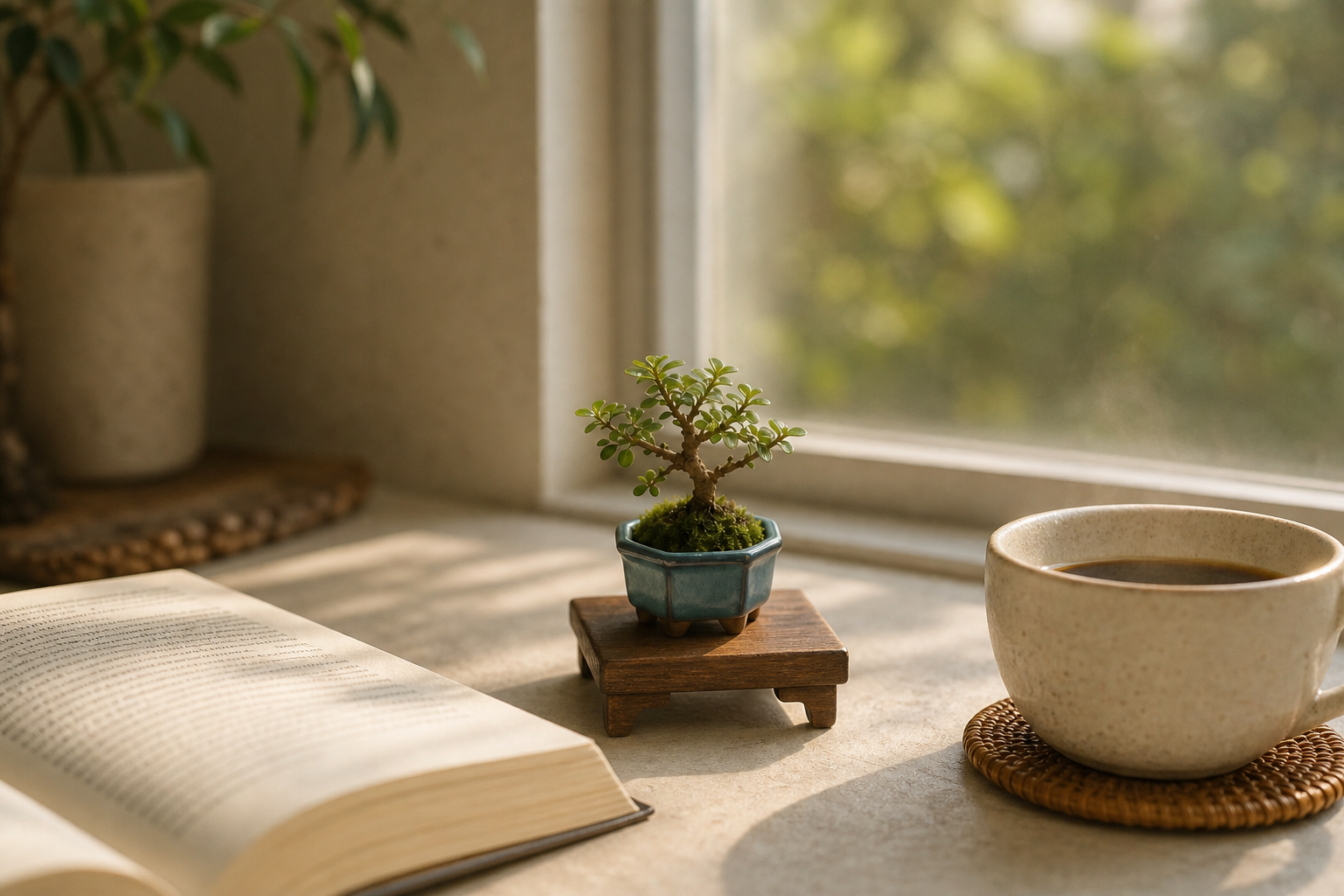
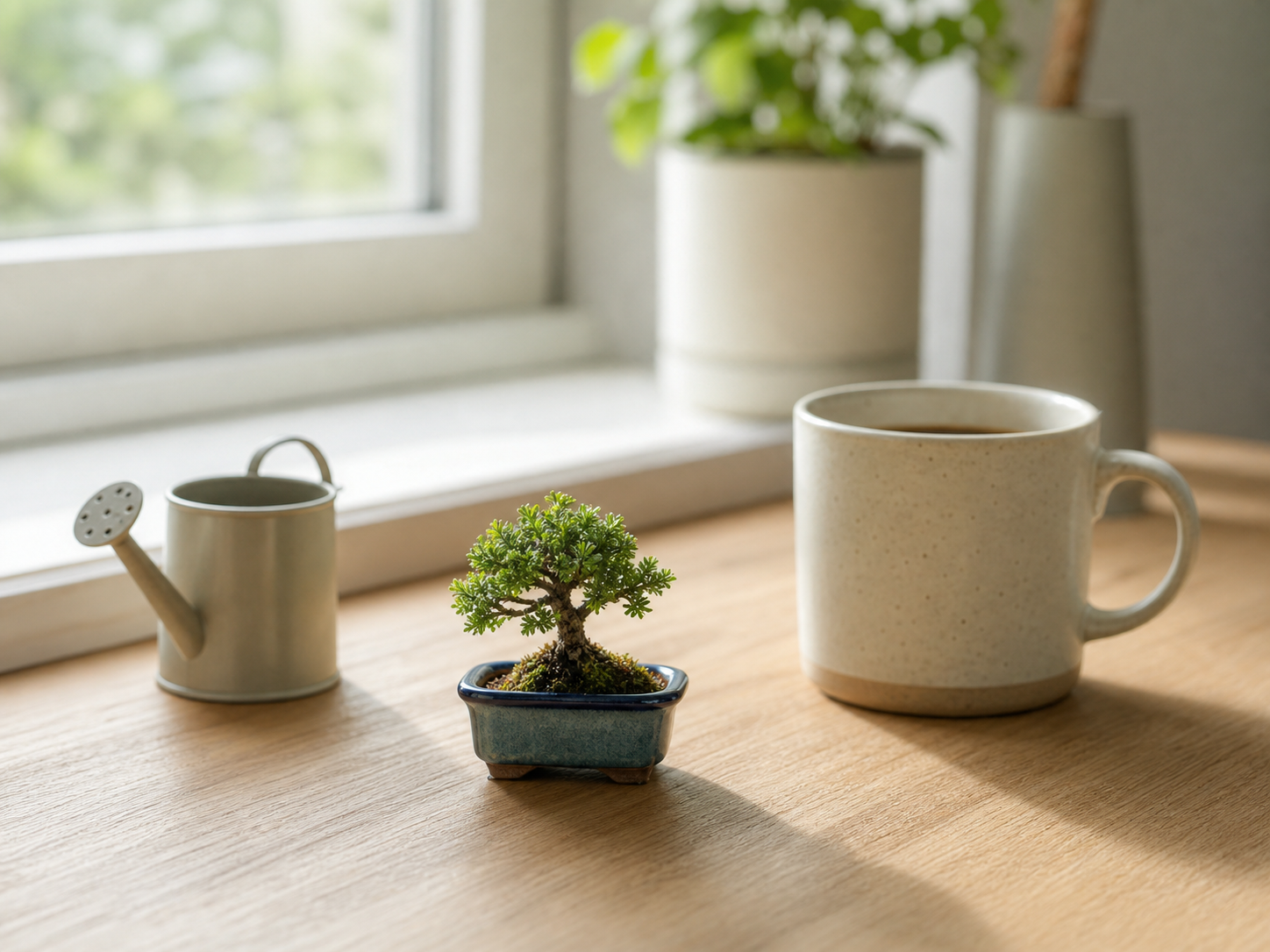
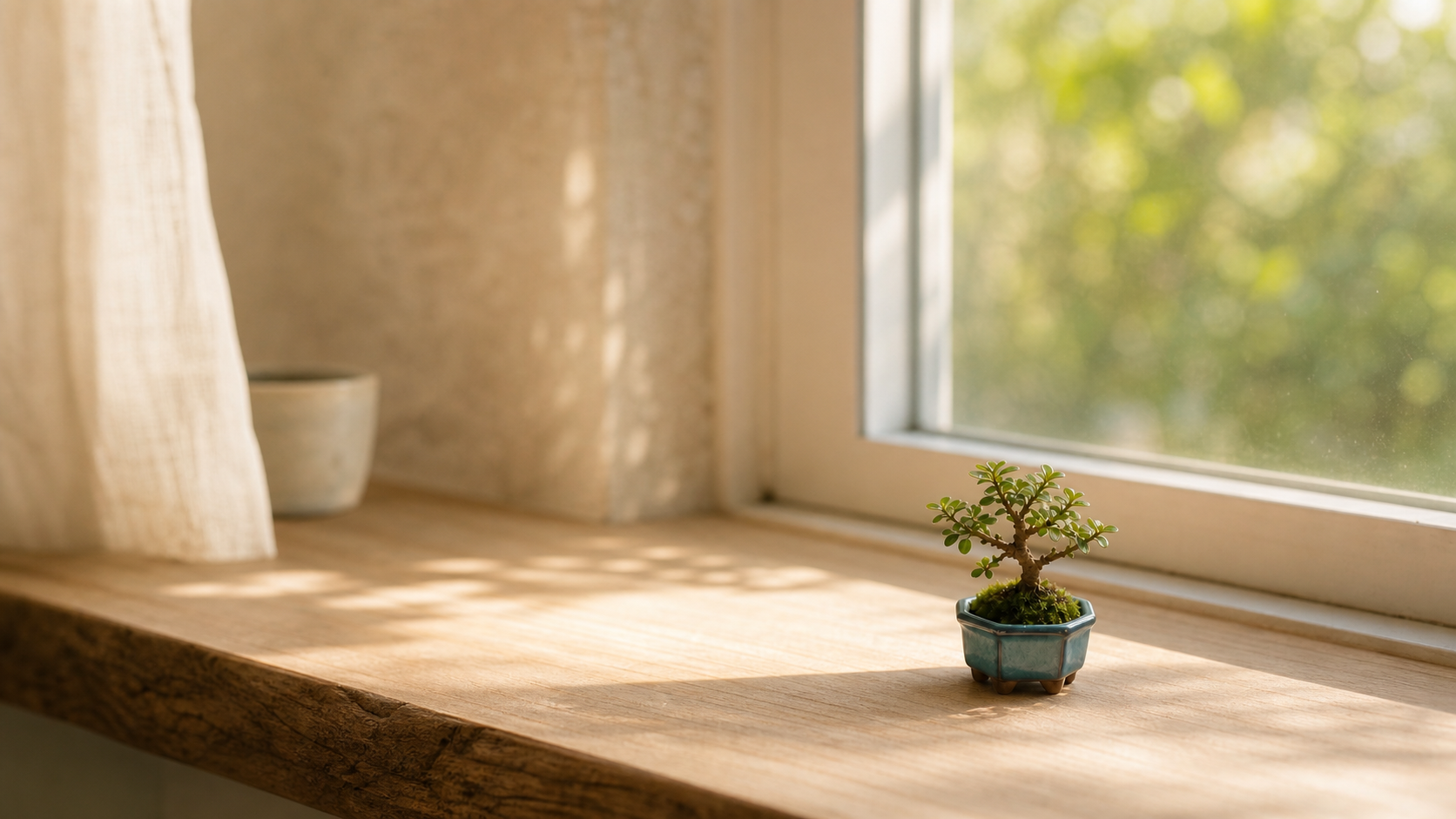
A fingertip-sized blue-potted mame bonsai on a windowsill beside coffee in warm morning light

Imagine the feeling

A quieter kind of morning.

Sunlight across the table. Coffee cooling beside the window. One small tree asking nothing more than a moment of your attention. Mame bonsai is less about having another thing—it is about making room for a ritual you can return to.

A small style with close attention

A Small Tree, A Different Pace

Mame bonsai are among the smallest styles of bonsai. They are often only a few inches tall and can sit comfortably in the palm of your hand.

Their small scale invites a little attention: a glance at the soil, a pause by the window, a living detail that changes gently over time.

A fingertip-sized miniature bonsai beside a coffee cup during a quiet morning

Simple supplies

What You’ll Need

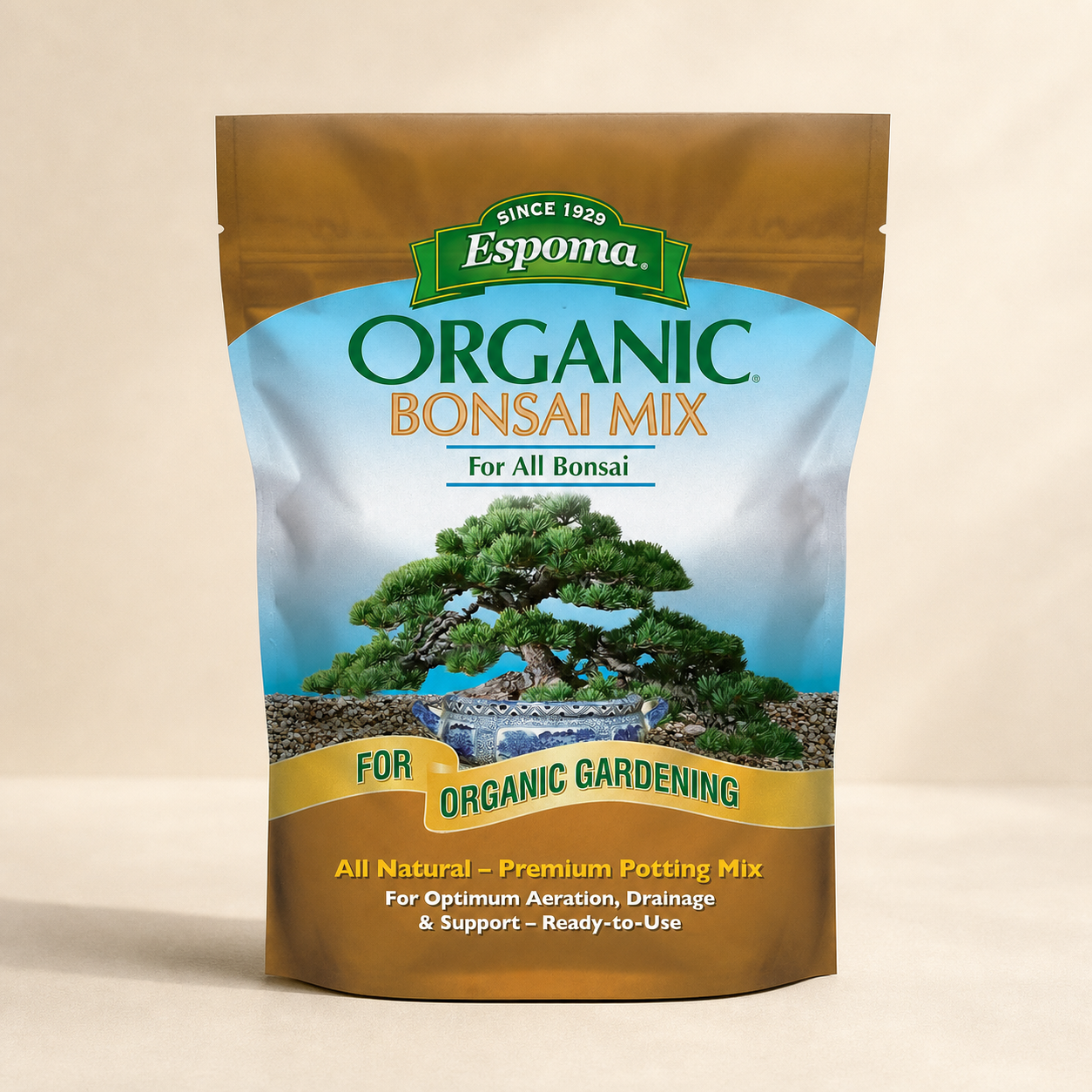
Regular potting soil may hold too much water for a tiny bonsai pot. A free-draining bonsai mix is a safer starting point for beginners.

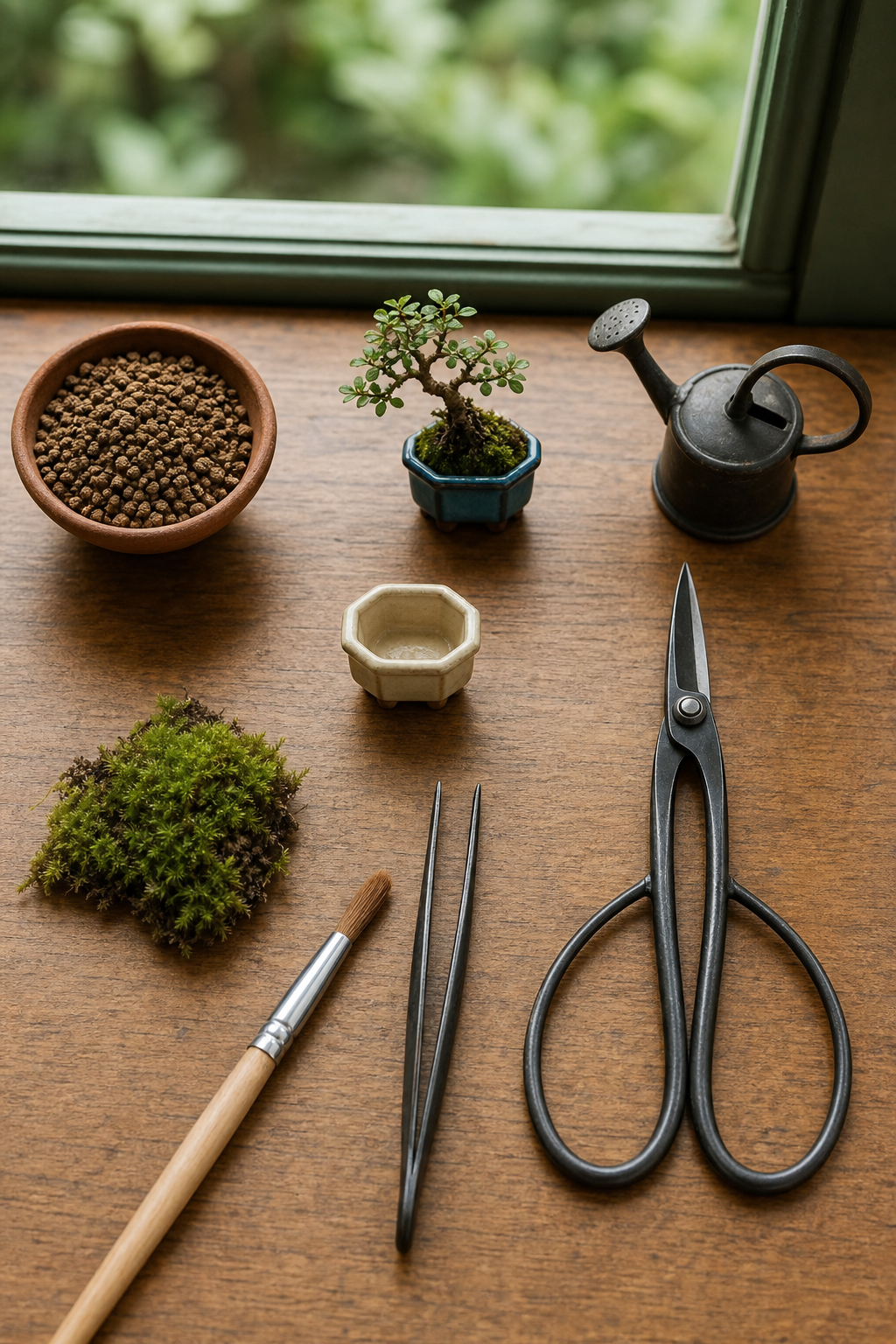
  • A young, compact plant suitable for bonsai
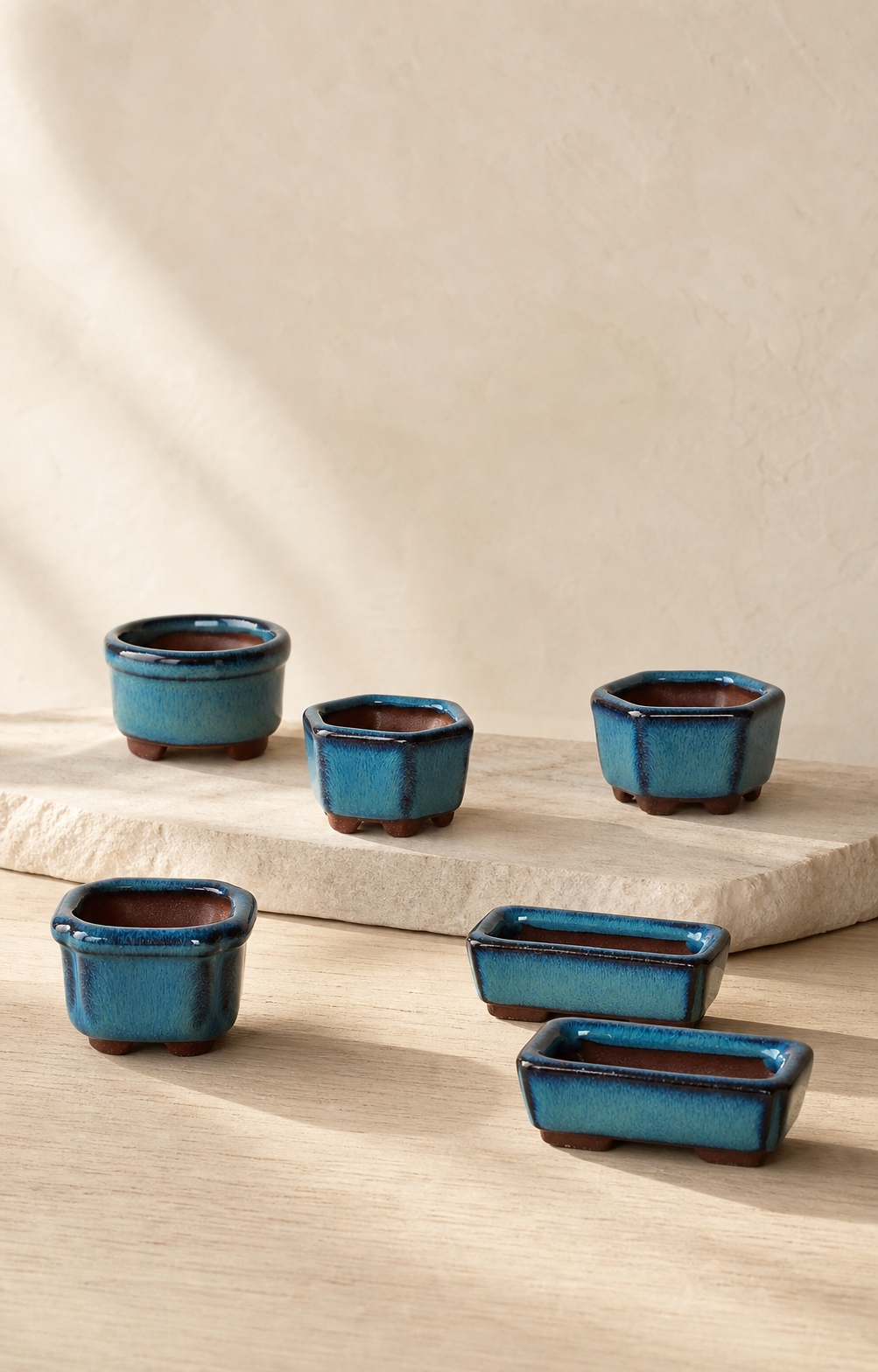
  • A miniature pot with a drainage hole
  • Fine or ready-to-use bonsai soil
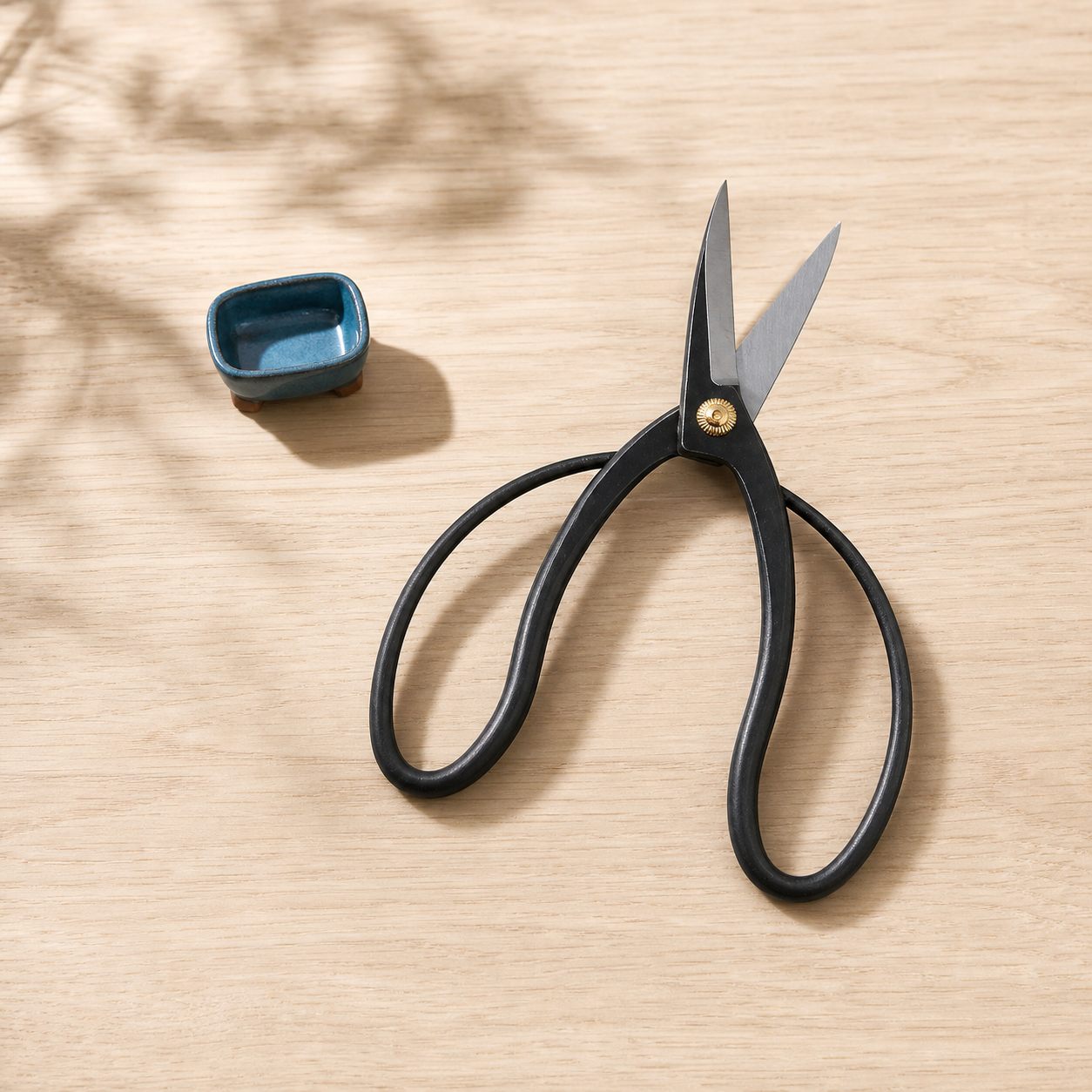
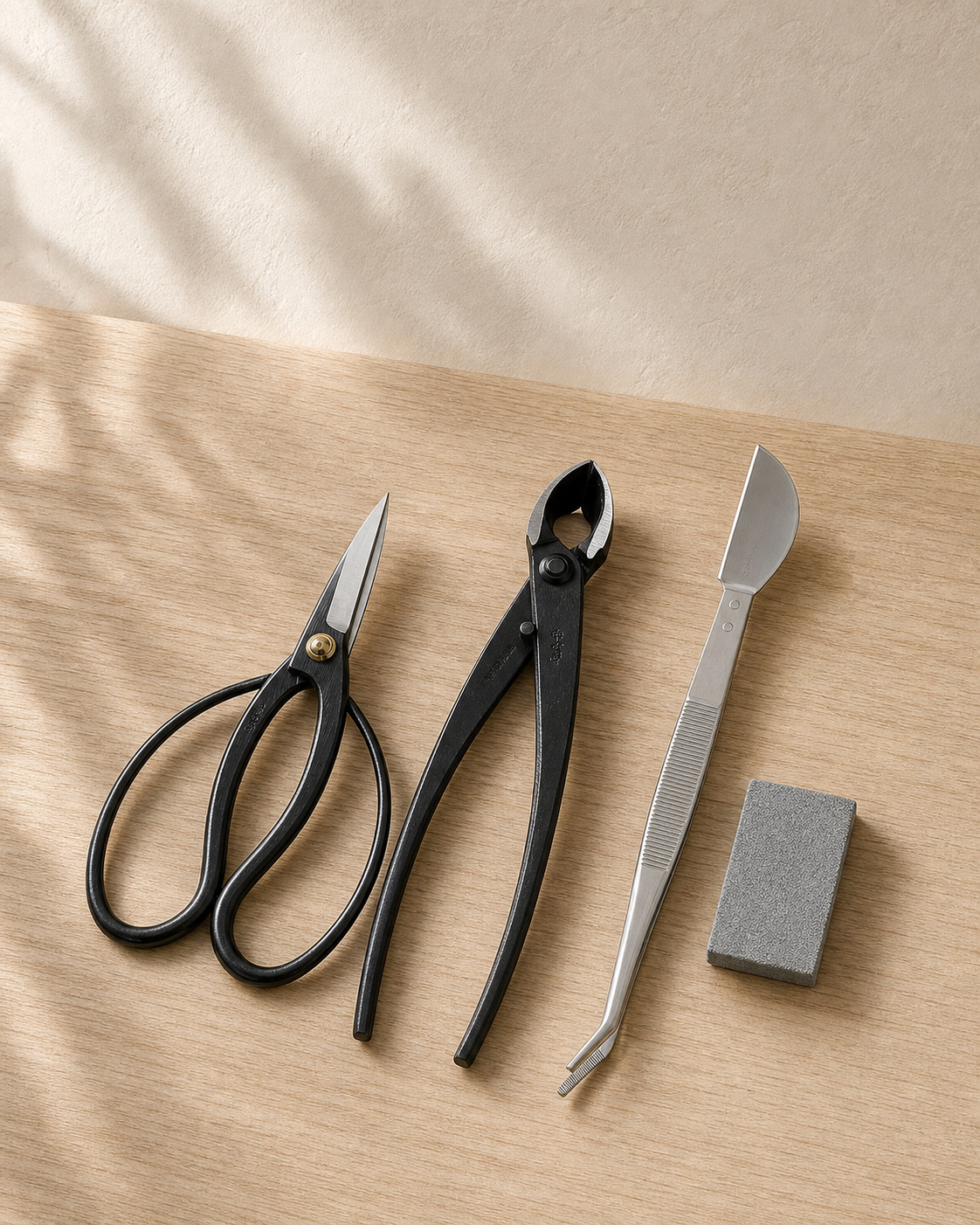
  • Small trimming scissors
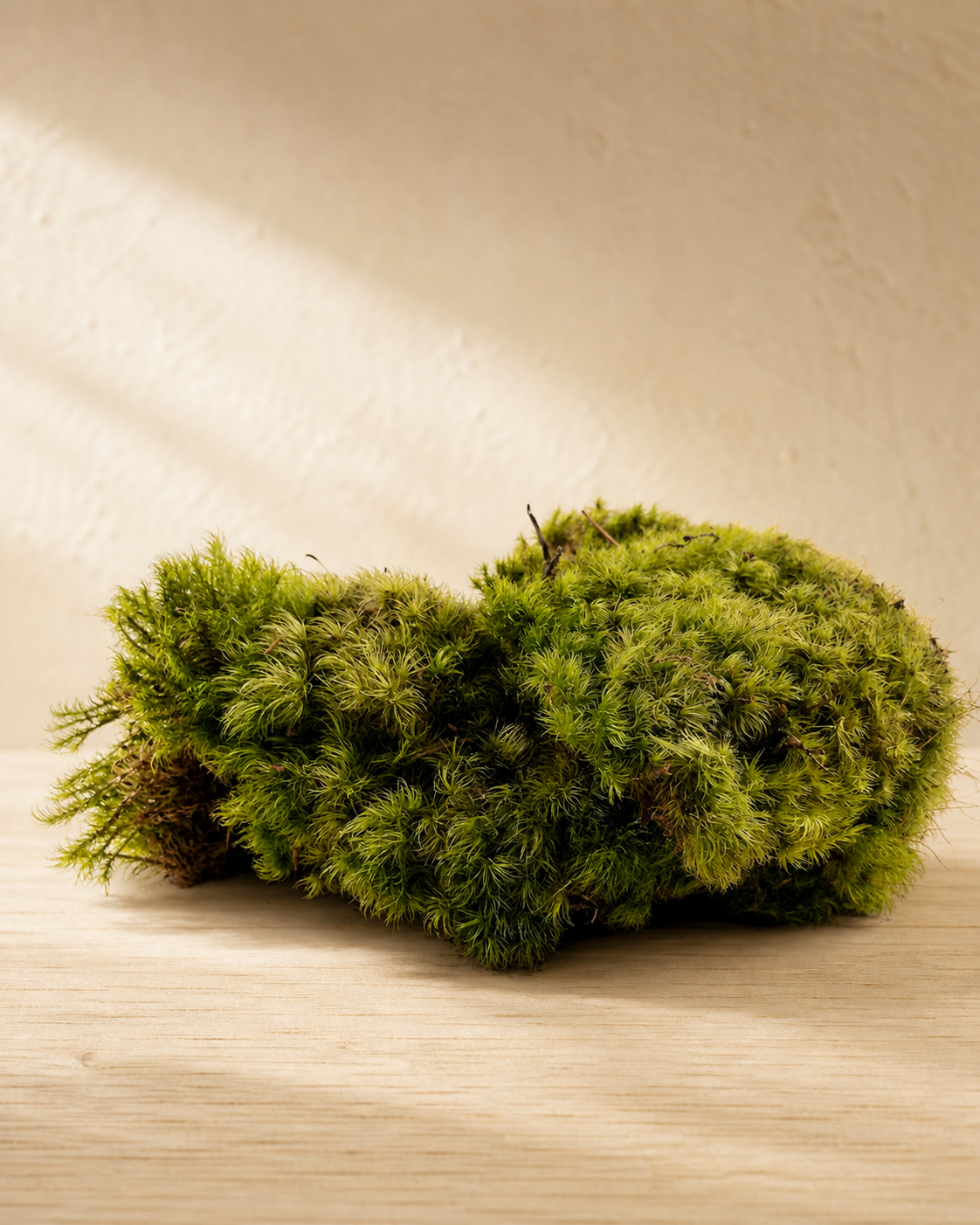
  • Moss or decorative top dressing
  • A narrow-spout watering tool
  • A beginner bonsai guide
A fingertip-sized mame bonsai in a blue glazed pot beside soil, moss and 180 mm bonsai scissors

A tree to live with

Choose Your First Tree

Not sure which tree to start with?
These beginner-friendly species are popular in North America and can all become beautiful miniature bonsai.

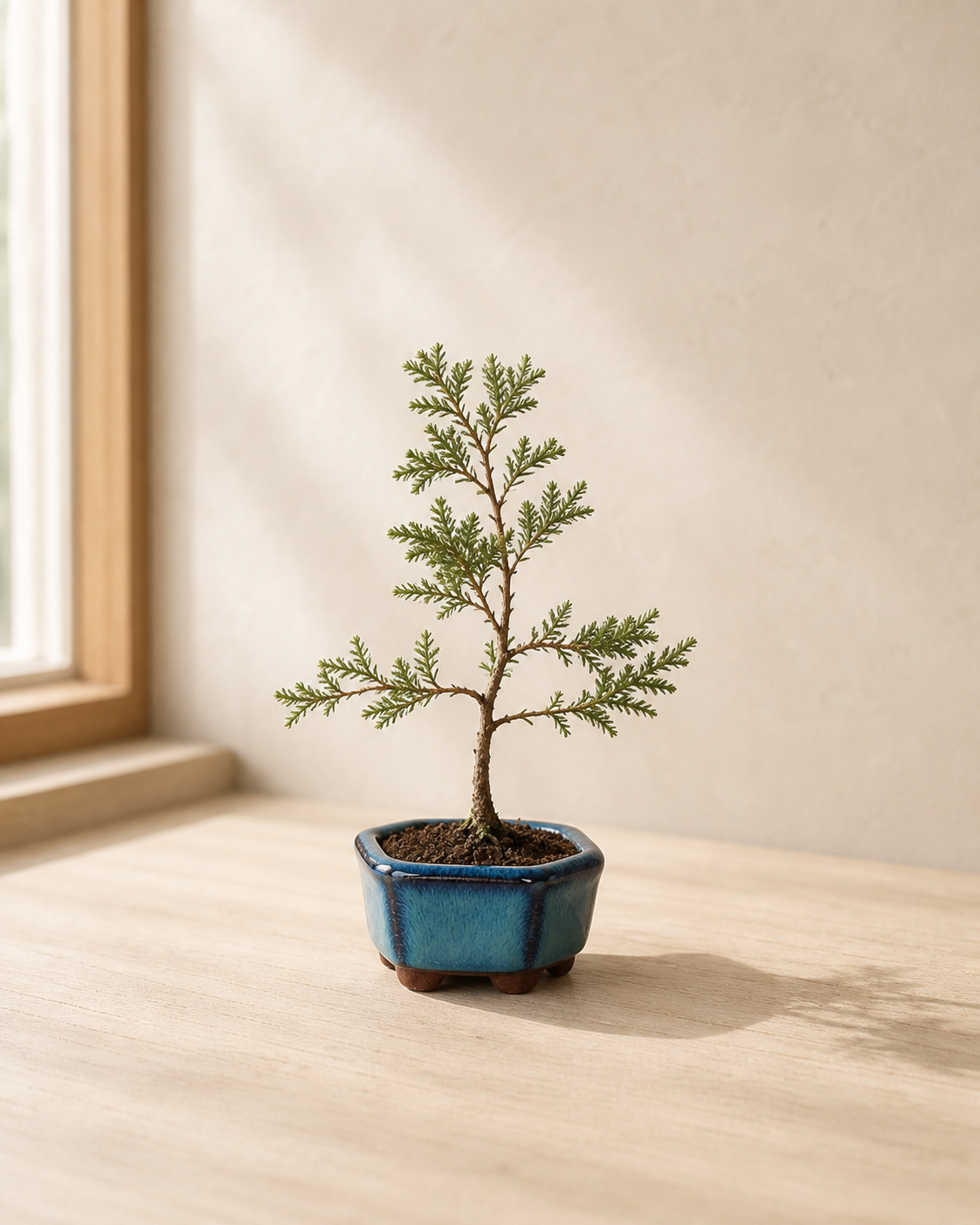
Chinese juniper bonsai with dense green foliage in a small pot

Chinese Juniper

Best forComplete Beginners

One of the easiest bonsai trees to grow. Hardy, forgiving, and widely available in North America, making it an excellent first choice.

  • Easy Care
  • Classic Bonsai
  • Evergreen

Seeds, young trees, and starter kits are commonly available in North America.

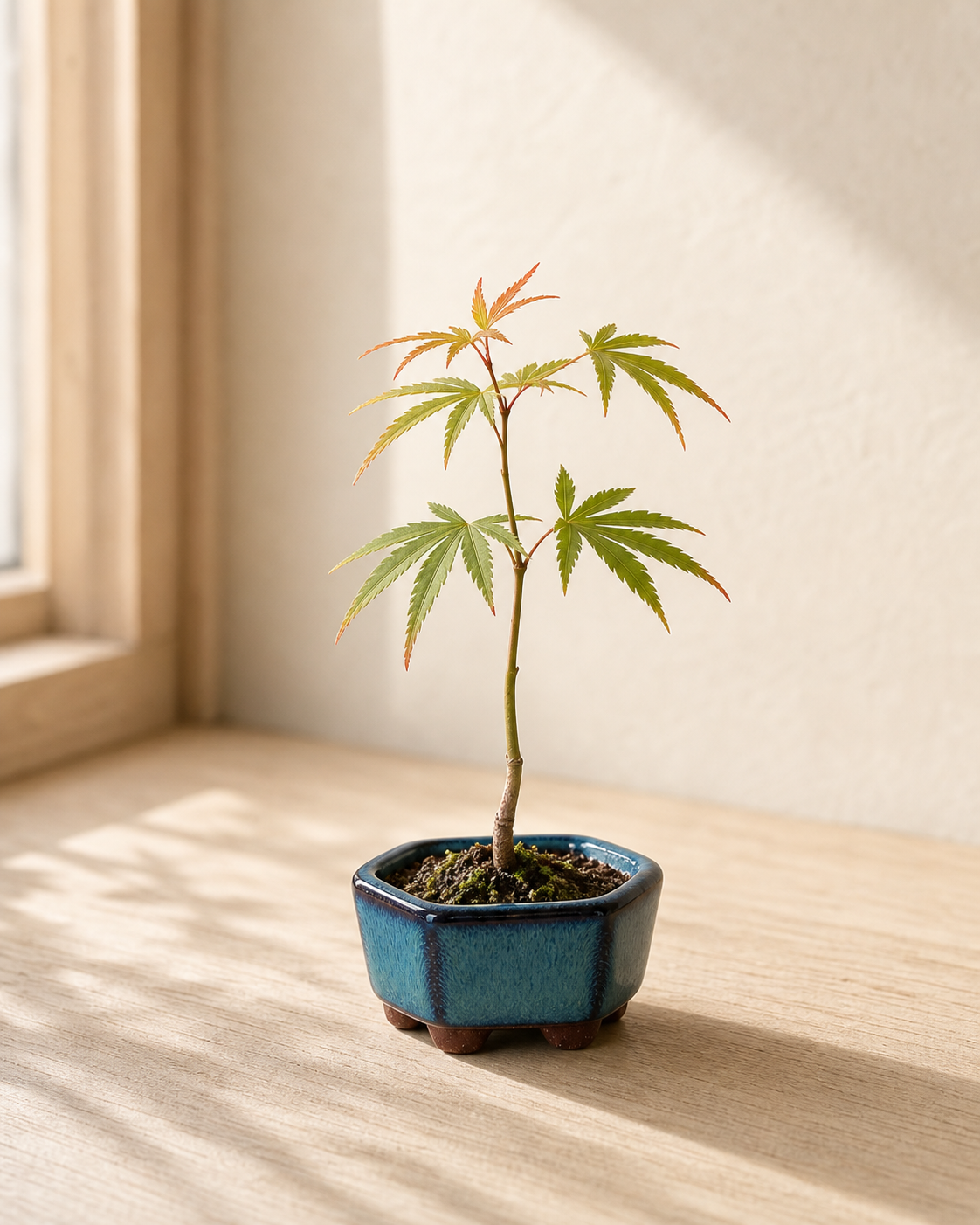
Japanese maple bonsai with delicate leaves and warm seasonal color

Japanese Maple

Best forSeasonal Beauty

Loved for its delicate leaves and brilliant autumn colors. A timeless Japanese favorite that brings elegance throughout the seasons.

  • Autumn Color
  • Elegant
  • Japanese Favorite

Seeds, young trees, and starter kits are commonly available in North America.

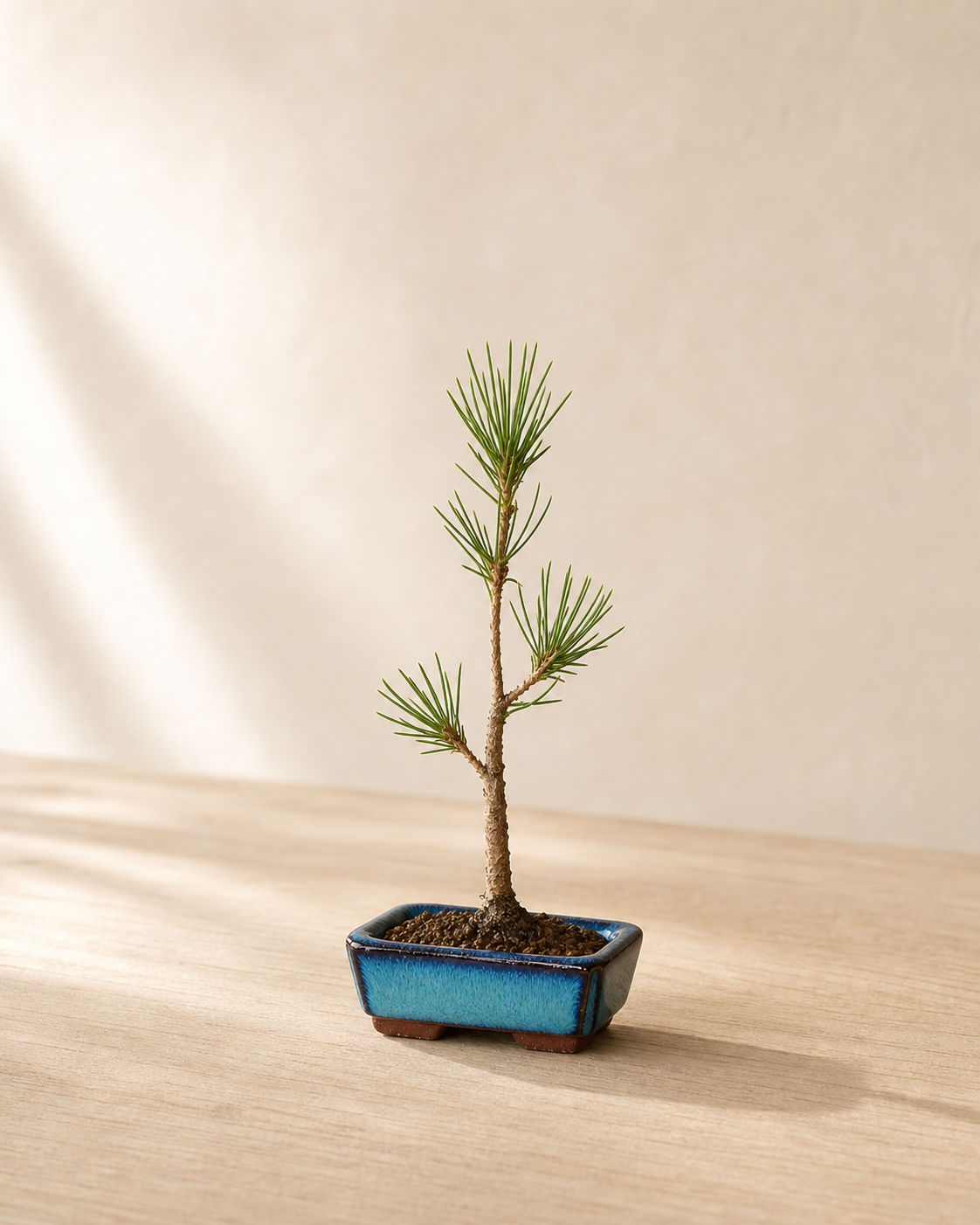
Japanese black pine bonsai with a rugged trunk and dark green needles

Japanese Black Pine

Best forTraditional Bonsai

A classic symbol of Japanese bonsai. Its rugged character and graceful silhouette reward patient growers over many years.

  • Traditional
  • Long-term
  • Evergreen

Seeds, young trees, and starter kits are commonly available in North America.

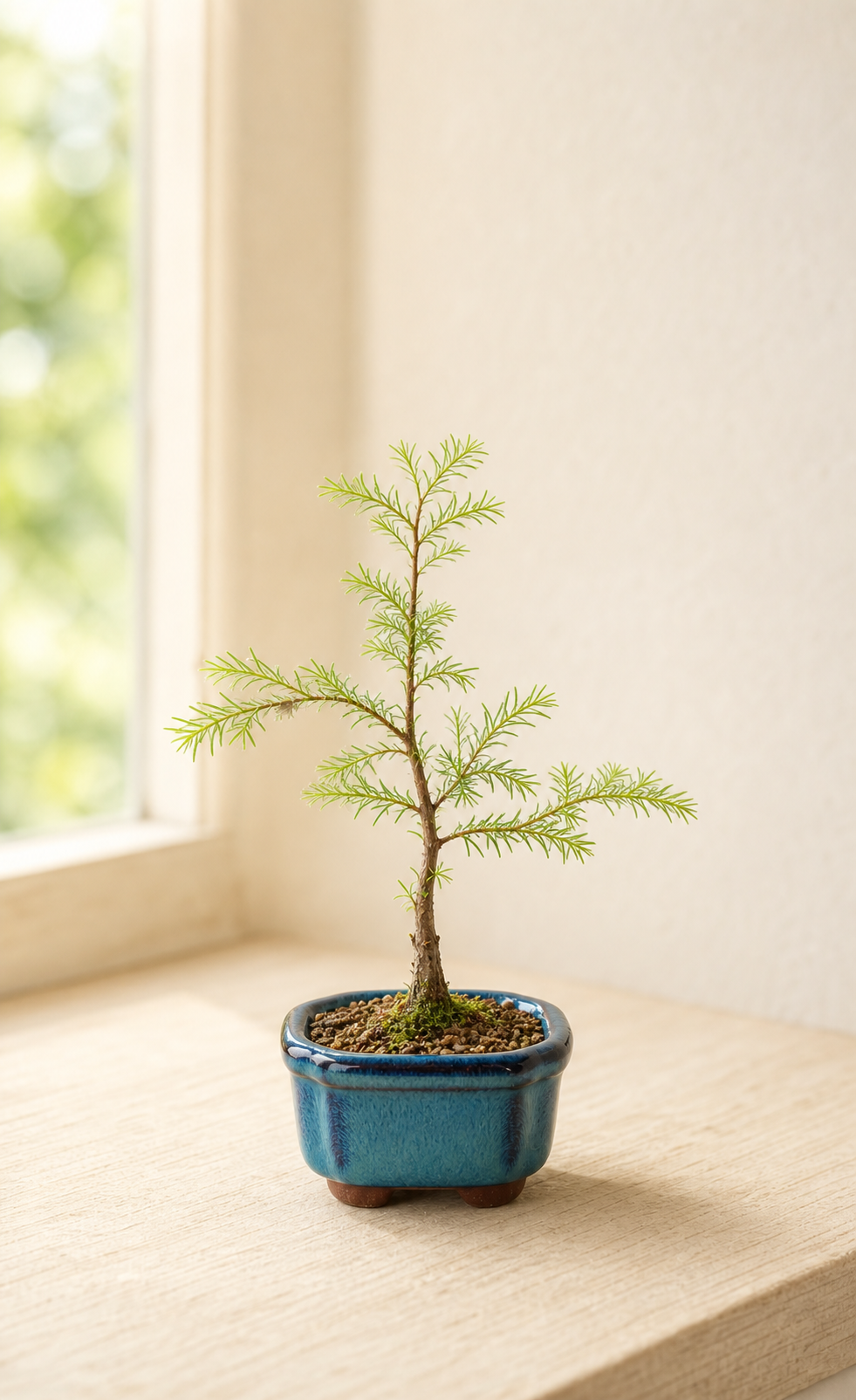
Bald cypress bonsai with a developing trunk and soft green foliage

Bald Cypress

Best forFast Growth

A North American favorite that develops quickly and creates dramatic trunks. Great for those who enjoy watching their bonsai change over time.

  • Fast Growing
  • North American Native
  • Unique Character

Seeds, young trees, and starter kits are commonly available in North America.

Which one feels like you?

There isn't a single "best" bonsai tree.
Choose the one that makes you want to slow down and care for it.
That's usually the right place to begin.

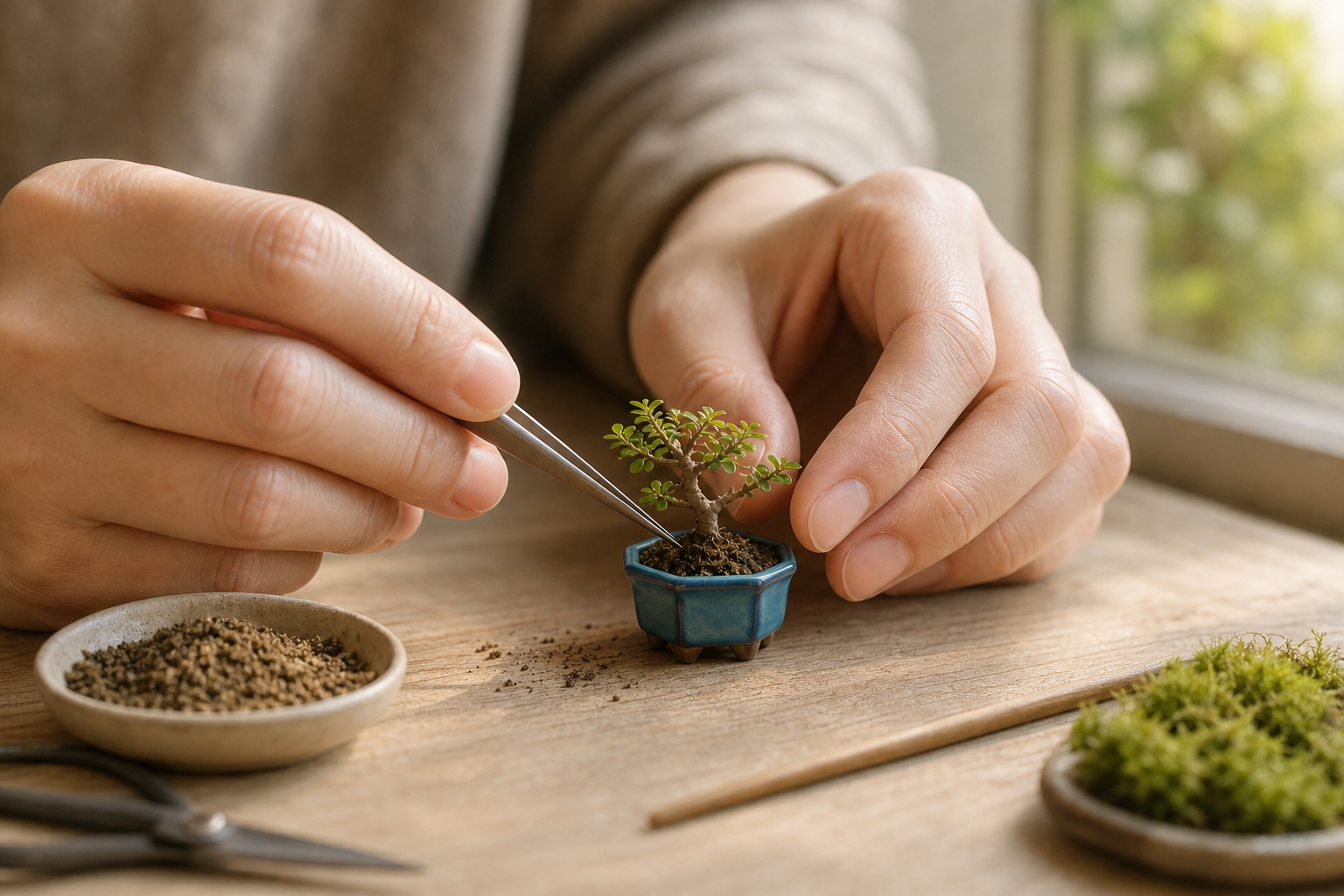
A fingertip-sized mame bonsai being planted on a sunlit wooden table with a small amount of soil, moss, scissors and tweezers

A small ritual, four moments

Make space for something living.

A few gentle choices are enough to turn a young tree into a small part of your everyday space.

  1. A fingertip-sized bonsai in a blue glazed pot held near a window

    Choose a Tree You Want to Live With

    Start with a compact, healthy young plant. Look for a shape that makes you want to pause and look again—there is no need to rush the choice.

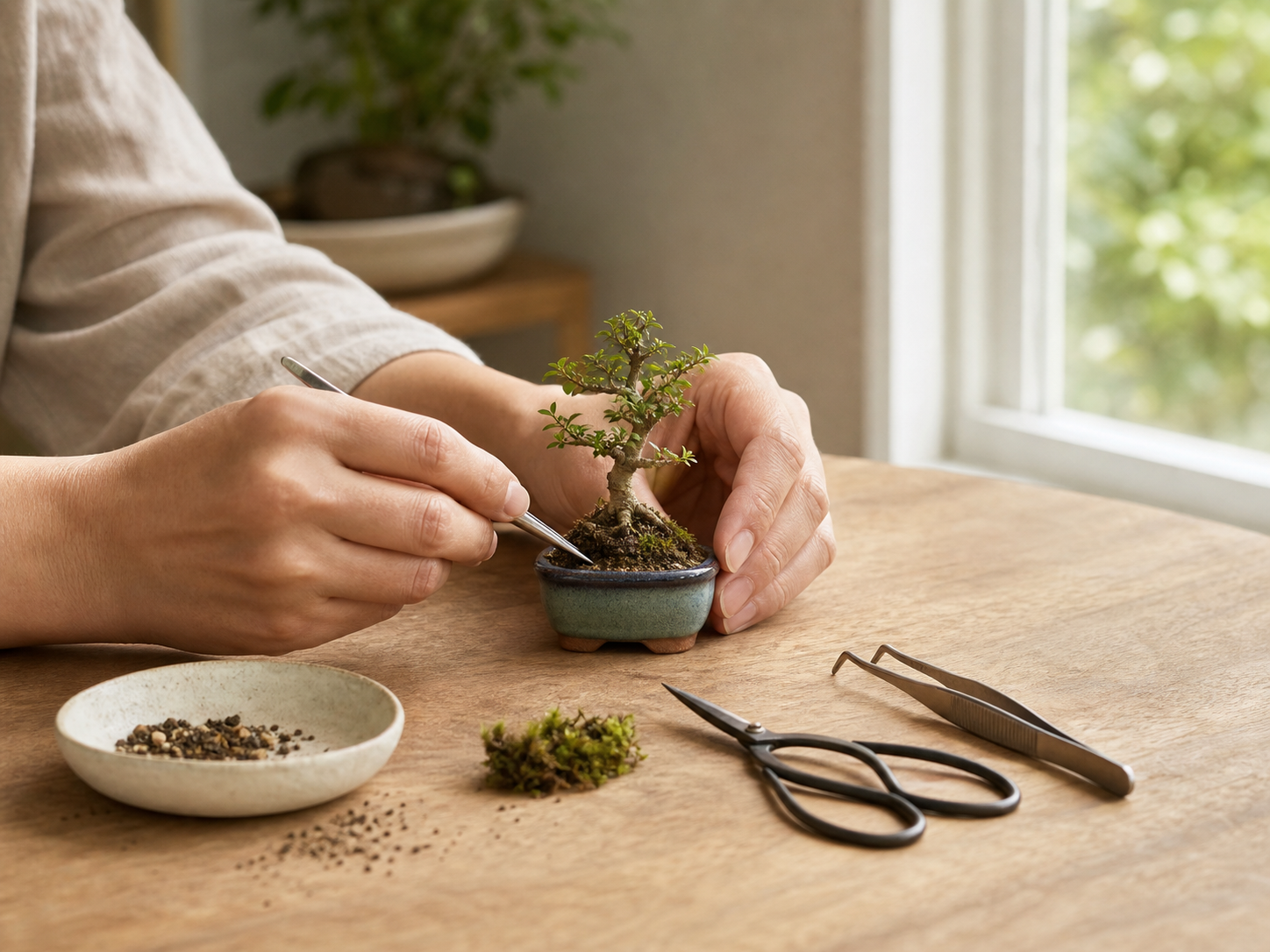
  2. Hands planting a fingertip-sized bonsai in a blue glazed pot

    Give It a Small, Beautiful Home

    Use a miniature pot with a drainage hole and a free-draining bonsai soil. Set the tree slightly away from center, leaving room for its shape to feel natural.

  3. A fingertip-sized blue-potted mame bonsai in gentle morning light

    Create a Natural Finish

    Add soil in small amounts, easing out air pockets with a narrow tool. A little rinsed moss can soften the surface while leaving the trunk base visible.

  4. A fingertip-sized mame bonsai in a blue-green glazed pot beside a small watering can and coffee cup in morning light

    Let Care Become a Moment

    Water thoroughly after planting, then simply notice it often. Tiny pots dry quickly, so the best routine is not a schedule—it is a quiet daily glance.

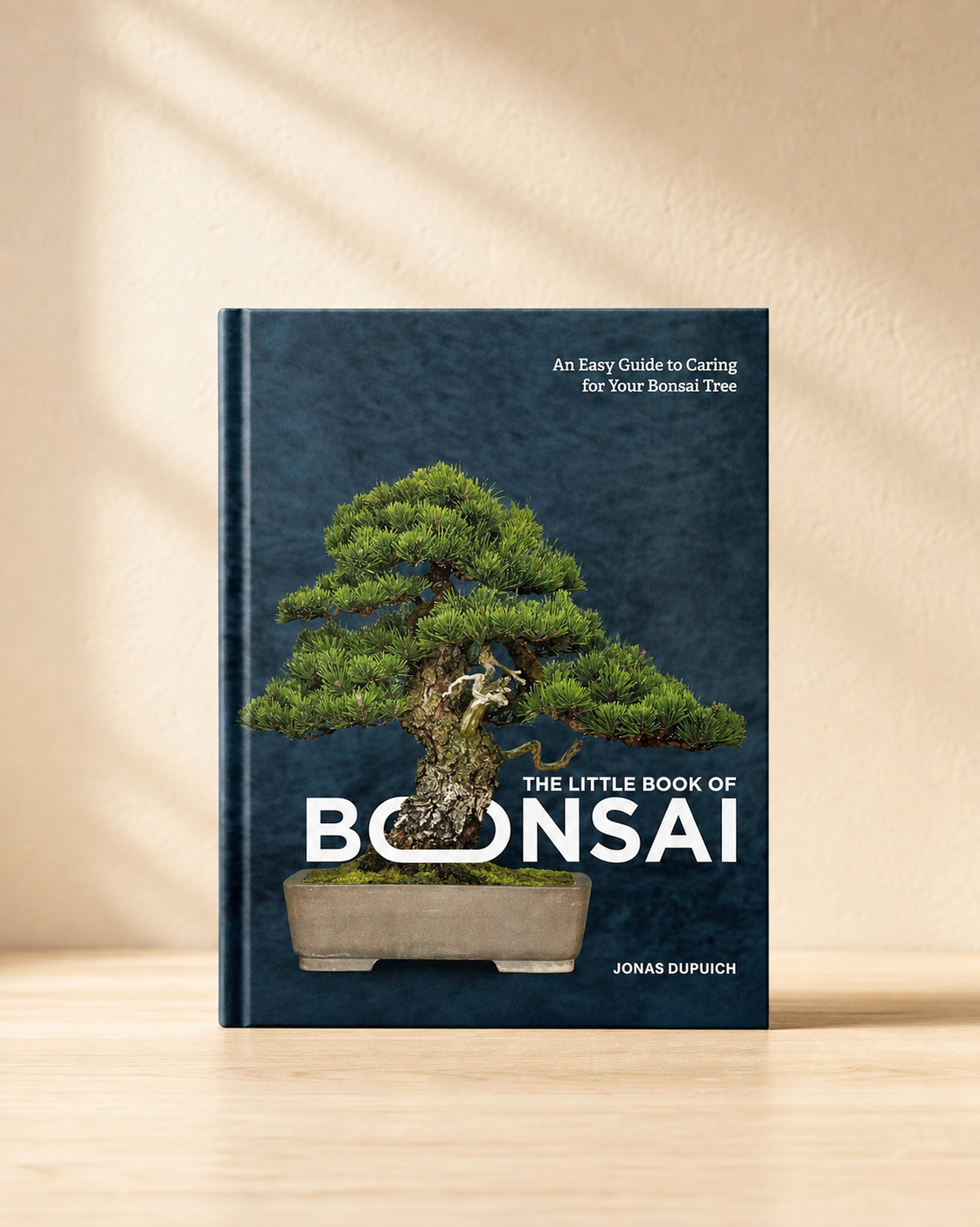
The Little Book of Bonsai hardcover standing on pale oak against a warm ivory backdrop

Further reading

Continue Your Bonsai Journey

Want to learn more after planting your first bonsai?

This beginner-friendly guide explains the basics of shaping, watering, pruning, and long-term care in a simple and approachable way.

Our PickThe Little Book of Bonsai

View on Amazon
A fingertip-sized mame bonsai in a blue-green glazed pot resting on a sunlit wooden windowsill

Start Small.

You don't need to master bonsai on your first day.

One tiny tree.
One small pot.
A few quiet minutes.

That's enough to begin.

Over time, you'll naturally learn more as your bonsai grows with you.

Questions, answered

FAQ

How small is mame bonsai?

Mame bonsai are generally only a few inches tall, though definitions vary among growers and exhibitions.

Can beginners grow mame bonsai?

Yes, but their small pots dry quickly. Beginners should check moisture frequently and start with a hardy plant.

Do miniature bonsai need drainage holes?

Yes. A drainage hole helps excess water escape and reduces the risk of waterlogged roots.

Can I use regular potting soil?

Regular potting soil may hold too much water for a tiny bonsai pot. A free-draining bonsai mix is usually a safer starting point.

Is this soil made specifically for mame bonsai?

No. It is an all-purpose bonsai mix rather than a dedicated mame bonsai soil. For very small pots, remove any particles that feel too large before planting.

Should I use live moss?

Live moss is optional. It creates a finished appearance, but it should be rinsed and inspected before indoor use.

As an Amazon Associate I earn from qualifying purchases. · Last updated: 2026-07-26